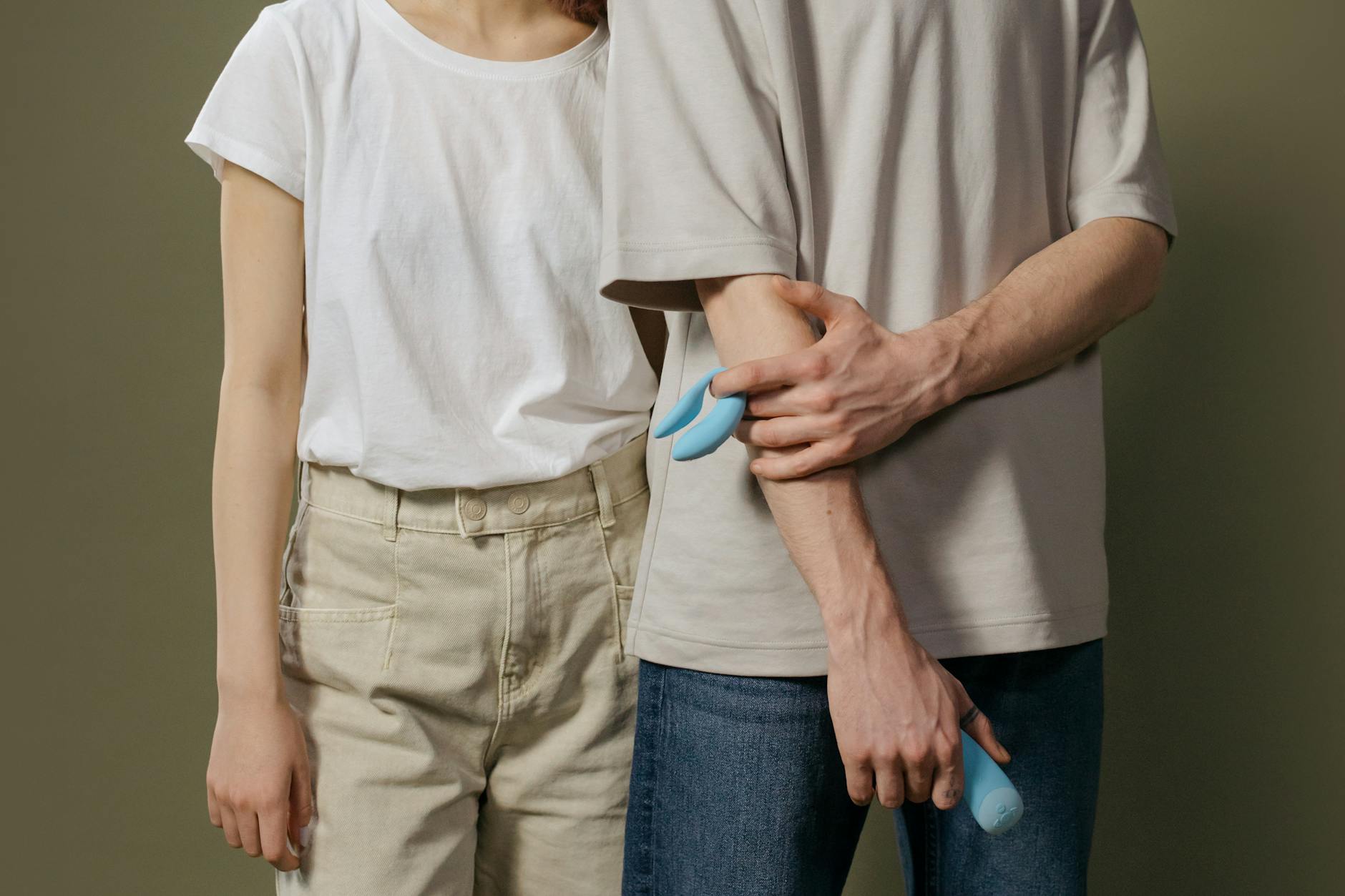
Do Lemon Vibrators Work Better for Partner Sex Than Solo Play
The suction technology changes everything about how couples experience pleasure together. Here's what actually shifts when a second person enters the room.
Lemon vibrators feel different with a partner than they do alone. Not better or worse. Different. And that difference matters because the intensity, the positioning, the pacing, and even the emotional load all shift when there's another person in the room.
I've worked with hundreds of couples navigating this territory, and the pattern is always the same. They buy a clitoral vibrator thinking it'll slot seamlessly into partnered sex the way it does when they're alone. Then they try it together and feel confused because the rhythm doesn't match what they expected, or the sensation feels weird coming from their partner's hand instead of their own, or suddenly there's this unspoken question about whose pleasure is getting prioritized.
Lemon vibrators actually handle partner dynamics better than traditional vibration does. The suction mechanism creates a gentler entry point for couples play because it's less aggressive, which changes the whole conversation.
When you're using a lem vibrator solo, you control depth, pressure, and duration completely. Your body responds at its own pace. There's no timing negotiation. With a partner, traditional vibrators create friction about intensity because they're designed for direct clitoral stimulation, which can be overwhelming when someone else is holding the controls.
Suction works differently. The technology creates a more sensual, less mechanically intense sensation. This might sound like a small detail, but it fundamentally shifts how couples approach the device together. Instead of "this is too much" or "I need you to hold it still," the conversation becomes more collaborative because the sensation itself is less demand-driven.
I've noticed that couples who switch to suction vibrators report better communication about pacing and sensation. That's not accidental. The tool itself creates less pressure, so there's more room for actual connection instead of just managing stimulation levels.
Solo play, you're working with your own anatomy and angles. Your hands know exactly where to go. Partner play requires negotiating space, angle, and access in real time. This is where most couples hit friction.
With a lem vibrator, positioning becomes simpler because the suction head has a smaller surface area than traditional vibrators. Your partner can reach you more comfortably from different angles. You can use it during penetrative sex more easily because it's not creating the bulk and pressure that wider vibrators do. You can guide it more intuitively because the sensations are coming from suction rather than raw vibration.
The practical upshot: many couples find that lemon vibrators work better for partnered sex specifically because the geometry just cooperates more. You're not negotiating around a large, buzzing device that's making everything feel cramped.
Here's something therapists don't usually say directly. In solo play, the person experiencing pleasure controls everything. In partner play, control gets distributed. This is either hot or annoying, depending on your dynamic and how you navigate it.
With a lem vibrator, this matters less than it does with traditional vibrators because the intensity curve is gentler. You can't accidentally push it to a level that's painful or jarring because the suction mechanism has a narrower range of discomfort. This actually makes it safer for partner exploration because there's less risk of someone (usually the partner) cranking it to max without realizing how much that changes the experience.
I recommend couples start with lower suction patterns when exploring together, even if the receiving partner usually uses higher settings solo. The difference between your solo experience and a shared one is real, and starting conservative gives you space to build intensity together rather than starting at your solo maximum and having nowhere to go.
When you're alone with a clitoral vibrator, you're not managing anyone else's feelings about what's happening. You're not reading their face to see if they're bored or engaged. You're not wondering if your pleasure is taking too long or if they're enjoying this as much as you are. Partnered pleasure introduces all of that at once.
Lemon vibrators help with this because they slow things down naturally. You're not racing toward an orgasm with a device that's cranked to maximum. Instead, you're building sensation more gradually, which creates more time for actual intimacy and connection alongside the physical stimulation.
Many couples tell me they use a lem vibrator not because they need it to reach orgasm, but because it changes the pace and quality of partnered sex in a way that feels more intimate. The suction sensation creates a different rhythm than vibration alone. Your partner isn't just holding a tool. They're creating an experience with you.
Start by using it solo first if your partner hasn't seen one in action. Show them how it feels to you. Talk about the sensation. This removes the performance anxiety that sometimes arrives when a partner is present for the first time.
Then, when you use it together, frame it as exploration rather than a fix. Don't say "I need this to come." Say "I want to experience this with you." The framing genuinely affects whether it feels collaborative or like someone's just trying to optimize their orgasm.
Begin with direct clitoral stimulation while you're already aroused, then experiment with using it during partnered sex if that appeals to you. Some couples love adding a lem vibrator to penetrative sex. Others prefer using it before or after. There's no single right way. The point is to discover what works for your specific bodies and desires.
If intensity feels off, adjust the suction setting rather than assuming partner play always requires turning things down. Sometimes a couple finds they actually enjoy exploring higher settings together because the collaborative aspect changes how the intensity feels psychologically.
Three specific situations where partnered use genuinely outperforms solo play.
First: when you want to be touched elsewhere while experiencing clitoral stimulation. A lem vibrator takes up less hand real estate than traditional vibrators, so your partner's hands stay more available for touching your body, your face, your breasts. You get stimulation and contact simultaneously in a way that feels less juggling-intensive.
Second: when arousal is slower than usual. Maybe you're tired, stressed, or it's just one of those days. A partner using a suction vibrator on you creates a more sensual build than vibration alone. The rhythm is less aggressive. It invites your body to respond rather than demands it.
Third: when you want to extend session length without fatigue. Solo play with traditional vibrators can leave your wrist sore or require you to keep your arm in an awkward position. A partner holding the device means you can relax your body fully while sensation builds. This often translates to longer, deeper sessions.
Lemon vibrators are not magic for couples who have poor communication or unequal desire. A better tool doesn't fix a broken dynamic. If there's resentment, disconnection, or really mismatched libidos, a clitoral vibrator won't solve that. It might even highlight the gap because you're now sharing physical pleasure and all the feelings underneath come into sharper focus.
If you find that adding a lemon vibrator to partnered sex creates tension, that's useful information. It often means something else is being asked of the relationship that a toy can't answer. That's when couples coaching or therapy helps more than equipment does.
But for couples who communicate reasonably well and want to add dimension to their sex life together, a lem vibrator often works better than traditional vibrators because the technology itself is less aggressive, less position-dependent, and less prone to intensity negotiation.
You might notice that using a lemon vibrator with a partner changes your solo experience too. You'll have a point of reference now. That's normal and usually positive. Many people find they enjoy both contexts more after exploring them together because they understand their own preferences more clearly.
Partner sex and solo play don't need to be the same experience. In fact, they probably shouldn't be. The point is to understand how a tool like a lem vibrator shifts dynamics in each context, then choose how you want to use it based on what you're trying to create.
For a lot of couples, that means discovering that partnered pleasure can be slower, more connected, and less performance-driven than they expected. That's what a better clitoral vibrator creates: space for actual intimacy alongside excellent sensation.
Yes, and many couples prefer suction vibrators for this specifically. The design is less bulky than traditional vibrators, which means your partner can access your clitoris more comfortably during penetration. Position your partner's hand (or yours) so the vibrator reaches the external clitoris without interfering with penetration. Start with lighter suction settings if you're new to the combination. Some people find that partnered stimulation during penetration creates a fuller, more blended sensation than either alone. Others prefer using it before or after. Experiment to discover your preference.
Yes, the experience shifts. When someone else is holding it, you lose fine motor control but gain the ability to relax your entire body and receive stimulation. Your partner's hand might move slightly differently than you would, which changes the sensation rhythm. Many people report that partnered use feels more intimate but sometimes slightly less intense because the positioning isn't as precisely calibrated as it is when you're controlling it. This is usually a trade-off people enjoy because the increased intimacy compensates for slightly different intensity.
This is a really common anxiety, and it's worth addressing directly. Frame it clearly: a lemon vibrator isn't a replacement for your partner. It's an addition that allows you to experience a different kind of sensation together. Many people need clitoral stimulation to orgasm, and partnered sex doesn't always provide that naturally. Adding a vibrator actually makes partnered sex more satisfying for many people because they stop feeling anxious about whether orgasm will happen and can relax into connection. If your partner is resistant, have a conversation about what pleasure means to both of you. Sometimes couples therapy or coaching helps navigate these conversations more clearly.
Both work. Vibrators marketed as couple-friendly often have different shapes or controls, but a good solo vibrator like a lem suction device works beautifully in partnered scenarios because of how the technology is designed. The suction mechanism is inherently less intense and more collaborative than traditional vibration. You don't need a special couples vibrator, but make sure whatever you choose has a size and shape that doesn't create positioning problems during partnered sex.
Before you start, establish simple signals. You might say "stronger" or "lighter" instead of "more" or "less" because the suction intensity feels different from vibration intensity. Some couples use a hand signal system. The key is normalizing feedback as collaborative adjustment, not criticism. You're both learning what works. If your partner is using the vibrator, ask them to start slower and build based on your reactions rather than starting at your solo maximum. Check in mid-session. "Does this feel good?" creates space for honest adjustment. The more you use a lemon vibrator together, the more intuitively you'll understand each other's preferences.
Absolutely. Many people discover new preferences and sensations through partnered exploration that they then bring back to solo play. You might learn that you enjoy a different suction pattern than you thought, or that a certain angle feels better than you'd explored alone. Shared pleasure often increases comfort with your own body and desires, which translates into more satisfying solo sessions too. The tools don't change, but your understanding of what you want from them usually deepens.
If you're considering adding a lemon vibrator to partnered sex, start the conversation before you buy. Talk about what you're hoping to experience. Be honest about any nervousness. Then explore together without performance pressure. You might discover that your sex life becomes more connected, more creative, and genuinely more satisfying for both of you when you're willing to try something new together.
For couples who want support navigating these conversations or exploring intimacy more deeply, consider reaching out to a relationship specialist who understands modern sexuality. Sometimes the best tool is professional guidance, not equipment.