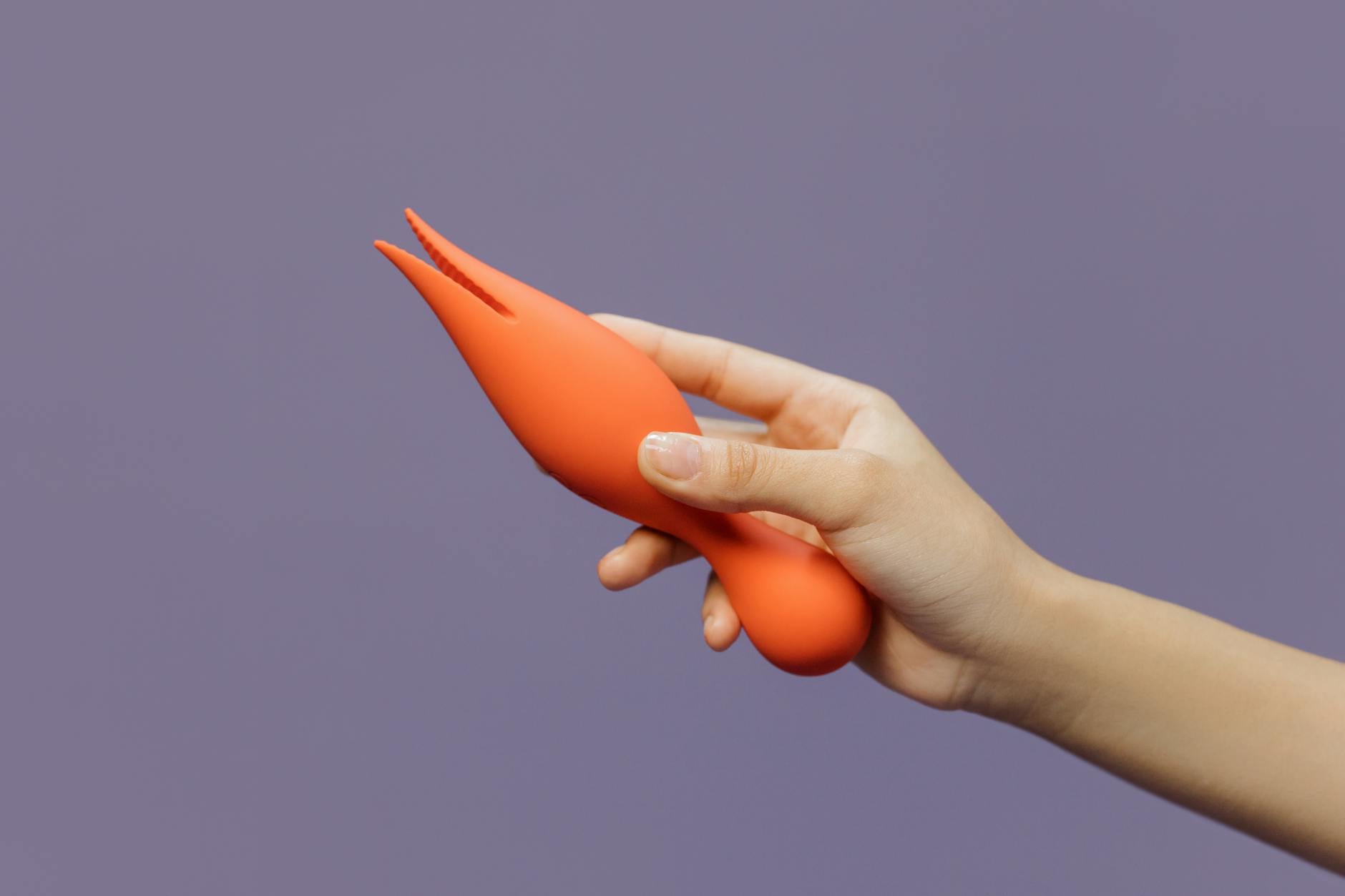
How Lemon Clitoral Vibrators Work for Low Desire in Busy Midlife Relationships
When work, family, and life logistics steal your bandwidth, desire doesn't disappear. It hides. Here's how air-suction technology and lemon vibrators bring it back to the surface.
Your desire didn't die. Your calendar did. Between parenting, work deadlines, aging parents, and the invisible labor of running a household, arousal becomes a luxury item you can't seem to schedule. When you finally have time alone with your partner, you're running on fumes, not fuel. That gap between what your body needs and what your life permits is where low desire in midlife relationships lives.
Here's the thing nobody tells you: desire in midlife isn't weaker than it was at 25. It's different. It requires conditions. And once you understand what those conditions actually are, you can build them back in. That's where lemon clitoral vibrators enter the picture.
There are three distinct pressures stacked on top of each other in midlife partnerships.
First, your baseline stress is higher. Career momentum, dependent children, health concerns, financial responsibility. Your nervous system is running warm most of the time. Arousal lives downstream from nervous system regulation. When you're in constant low-grade activation, your body doesn't have the bandwidth to shift into the parasympathetic state that pleasure requires.
Second, you've had the same partner for years or decades. The novelty-driven dopamine surge that powered desire in the early relationship is gone. That's not a failure of the relationship. That's neurochemistry aging naturally. What replaces it, if you tend to it, is deeper intimacy and more intentional pleasure. But that only works if you're actually building that intentionality in.
Third, the logistics of proximity have collapsed. You're living parallel schedules. When you're finally in a position to connect, you're both depleted. One partner might be ready, but the other is already in sleep mode. Desire requires a synchronized moment. In busy midlife, those moments are rare.
This is where lemon vibrators and air-suction clitoral stimulation matter practically, not philosophically.
Traditional vibration works by frequency. It requires your body to already be moving down the arousal curve to feel good. If you're stuck in neutral, vibration can feel like noise. It's asking your nervous system to speed up when it's already running on low.
Air-suction technology, the kind built into lemon clitoral vibrators like the Lem, works differently. Instead of vibration that builds in intensity, it creates rhythmic waves of gentle suction. That suction doesn't require foreplay first. You can start there. Your body doesn't need to be warmed up for it to feel like something. For people running on stressed, busy nervous systems, that's a game-changer.
The suction engages the tens of thousands of nerve endings around the clitoris in a way that registers immediately, without demand. There's no buildup required. You can be thinking about the project deadline at work, completely in your head, and still experience genuine sensation that pulls you out of that headspace. That's not woo. That's neurology.
Honestly though, the vibrator is the tool. The architecture is something else.
Low desire in midlife relationships thrives in isolation and infrequency. If you wait until you're both free, rested, and in the mood, you'll wait a long time. Instead, what works is small, consistent contact that doesn't require massive emotional or logistical setup.
That might look like this: ten minutes on a Thursday morning before work, in bed, with a lemon clitoral vibrator. Not a performance. Not foreplay that leads to partnered sex. Just you, exploring your own arousal, while your partner sleeps or reads beside you. That's enough. Over time, those ten-minute windows train your nervous system to remember that desire is still available to you. You're not waiting for the perfect moment. You're building tolerance and access in the margins.
For partnered sex, the same principle applies. A lemon vibrator isn't a stand-in for connection. It's a permission slip. If partnered arousal is inconsistent, starting with clitoral stimulation using the Lem removes the pressure for the vagina to respond on a timeline. You're building pleasure independently, on your own timeline. That takes the performance weight off the whole interaction.
I work with dozens of couples where one partner's desire has tanked and the other is confused. The conversation usually goes: "Is it me? Is it the relationship? Do you still love me?"
The answer is almost always: it's the schedule and the stress, not the marriage.
What that partnership needs is explicit permission and lowered stakes. Low-stakes pleasure helps. That means one partner can be using a lemon clitoral vibrator while the other does literally anything else. That's sexual connection without performance. That's presence without pressure.
It also means talking about desire differently. Instead of "I want more sex," the conversation becomes "I want touch, and I want to know you're thinking about me." Those are different things. One partner might not have energy for full sex, but can be present while you explore yourself. That's not a compromise. That's actually closer intimacy than synchronized orgasms with resentment underneath.
If you're in a midlife relationship where desire has gotten quiet, here's what actually works.
Start solo first. You don't have to share this with your partner immediately. Use a lemon vibrator. The Lem, or another lemon clitoral vibrator, specifically. Try it once a week for two weeks with zero other agenda. Notice what works. Notice the textures that matter. Notice the rhythm. This isn't about orgasm. It's about waking up the sensation receptors.
Then, if you want to, tell your partner. "I've been exploring something, and I want to try it together." That's it. Low disclosure, high follow-through. When you do involve your partner, start the same way. Not as foreplay. As its own thing. Ten minutes. No other sex on the table. Just the vibrator and whatever happens.
Third, build a micro-ritual. Pick a night, or a morning, or a specific time of day that's yours. Consistency matters more than duration. Desire is trainable. Your nervous system learns: this time, this place, this is for us. Within four to six weeks of consistent micro-practice, you'll notice a shift. Not because anything has magically changed, but because you've reminded your body that it's allowed to want again.
Sometimes low desire in midlife relationships isn't about stress or logistics. It's about hormones, medication, or deeper relational dynamics.
If you've been using a lemon clitoral vibrator consistently and nothing is shifting, a conversation with a gynecologist or therapist is important. Medication side effects, thyroid dysfunction, and unresolved resentment in the relationship can all tank desire no vibrator can fix. That's not failure. That's getting the right diagnosis.
But most of the time, in my experience, the issue is permission plus access. You don't have permission to want anything for yourself. You don't have access to moments that aren't somehow productive or dutiful. A lemon vibrator can't solve an inequitable relationship, but it can buy you back some autonomy. That matters.
Do not wait for desire to spontaneously return. Do not wait for a free weekend. Do not assume that if you just "reconnect" emotionally, the arousal will follow.
Midlife desire responds to structure and practice, not inspiration. Your nervous system is like a muscle. If you haven't been using it for pleasure in a while, you need to retrain it. That's not unromantic. That's realistic. And honestly, there's something intimate about choosing to prioritize this deliberately. It says: you matter. We matter. Even at 2 p.m. on a Tuesday, even for ten minutes, even with a tool in hand.
Lemon clitoral vibrators work for low desire in busy midlife relationships because they acknowledge the reality of your life and they work anyway. They don't require perfect conditions. They don't require hours. They don't require you to become a different person. They just require you to claim ten minutes and remember that you're allowed.
Most people notice a shift between four and eight weeks with consistent practice. That doesn't mean explosive desire. It means arousal feels accessible again. Your nervous system starts to recognize that pleasure is still available. The timeline depends on your baseline stress and how often you practice. Weekly practice typically shows results faster than sporadic use.
Absolutely. When you know your own arousal pathway, you can communicate that to your partner more clearly. You're not asking them to figure you out. You're bringing information. Solo exploration with a lemon vibrator gives you that intel. Plus, your partner benefits from seeing you aroused and engaged on your own terms. That's attractive.
That's worth a direct conversation, not avoidance. The discomfort usually isn't really about the vibrator. It's about feeling replaced, or not being enough, or fear of inadequacy. Reframe it: this is about bringing more arousal into the relationship, not away from it. Invite them to be curious. Some partners get interested when they see their partner genuinely enjoying themselves. If the jealousy persists, that points to a deeper relational issue that's worth addressing with a couples therapist.
Yes, specifically the air-suction technology built into lemon clitoral vibrators is gentler on desensitized tissue and doesn't require as much foreplay to feel good. Traditional vibration can feel overstimulating or flat if you're not already somewhat aroused. The Lem and similar lemon vibrators engage sensation differently, which tends to work better for people whose desire has been dormant.
Keep it simple. "I want to explore my pleasure more, and I'd like you to be part of that. Let's try this together." You're not asking permission. You're inviting presence. Start with your own exploration first. When you bring it to your partner, you're bringing confidence, not apology. That energy shift matters.
Many medications do tank desire and sensation. A lemon clitoral vibrator can help you access what's still available, but it won't override a systemic medication effect. If arousal has completely flatlined since starting a new medication, talk to your prescriber. Sometimes adjusting dose or timing helps. Sometimes switching medications is necessary. The vibrator helps with what's left, not with solving chemical imbalances.
Desire in midlife relationships isn't broken. It's just operating under different conditions than it did when you were younger. You have more responsibility, less novelty, and competing demands for your attention and nervous system. That's the context. Lemon vibrators and air-suction clitoral stimulation work within that reality, not against it. They give you back access to arousal without requiring conditions that your actual life can't provide.
The real shift happens when you stop waiting for desire to show up on its own and you start building the micro-rituals and the permission that bring it back. That's where the pleasure is. That's where the relationship deepens. Start small. Start consistent. Watch what happens.
If you're ready to explore this further, or if you need support navigating how to reintroduce pleasure in your relationship, we're here. Reach out to Hello Nancy and let's talk about what your next step looks like.