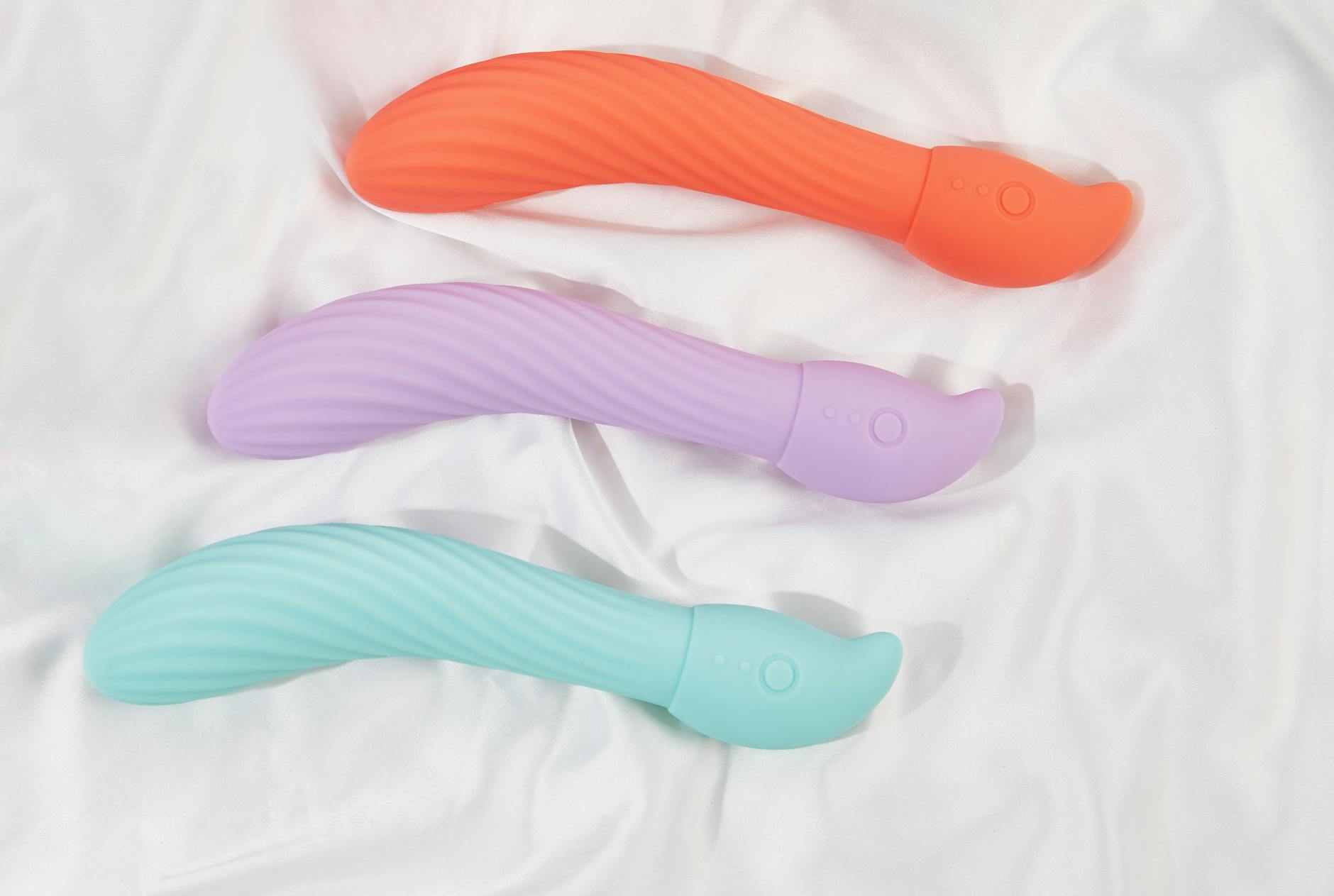
Your arousal isn't broken. It's just not linear. Some mornings you wake up ready. Other weeks, you could stare at your favorite thing and feel exactly nothing. Stress flattens desire one day and sharpens it the next. A good conversation reignites something you thought had left. This isn't a malfunction. This is what arousal actually looks like for most people.
The problem isn't your body. It's that most pleasure tools are designed as if arousal arrives on schedule, builds predictably, and peaks on cue. They're built for a fantasy version of desire that doesn't exist.
There are more variables at play than you think. Stress hormones (cortisol, adrenaline) actively suppress desire. Sleep deprivation mutes sensitivity. Your menstrual cycle shifts arousal architecture every two weeks. Relationship texture matters: conflict deadens response even when you logically want connection. Medications (antidepressants, antihistamines, blood pressure drugs) can reshape how fast your nervous system ignites. Alcohol, cannabis, and some stimulants change the pattern entirely.
But here's what's wild: even on days when spontaneous desire feels nonexistent, your capacity for pleasure is still there. The nervous system just needs a different entry point.
The Lem (and other lemon clitoral vibrators like it) work because they don't demand that arousal follow a typical arc. They adapt to where you actually are.
Traditional vibrators use steady, repetitive stimulation. If your sensitivity is high, that feels perfect. If you're numb or distracted, it becomes an endless mechanical drone. You're either in sync or you're fighting it.
Lemon suction vibrators use a different mechanism: they create rhythmic pulses of gentle suction and release. That's crucial when arousal is unpredictable because suction doesn't numb the same way repetitive vibration can. After thirty seconds of intense vibration, nerve endings get less responsive. Suction stimulates without that fatigue.
You can start on the lowest setting when sensitivity is muted, and the pattern itself actually helps arouse you deeper. By the time you're ready for intensity, your body's already responding.
One of the biggest differences in how lemon clitoral vibrators work is that they offer multiple patterns, not just speed increases. Most days, you'll want to move through patterns in order. Some days you skip the first two and dive straight into a pattern that matches where your arousal is already climbing.
This matters psychologically too. When you're fighting unpredictable desire, controlling the experience itself (choosing when to shift intensity, switching patterns on your timeline) often reignites agency. You're not waiting for your body to "cooperate." You're directing what happens.
There's a specific moment that kills arousal fast: when you're trying, and nothing's happening, and now you're thinking about how nothing's happening. The anxiety loop. Most people then push harder, use faster tools, and end up more frustrated.
Lemon vibrators sidestep that trap. Because the sensation is novel (suction rather than pure vibration), it interrupts the "I'm stuck" narrative. You're experiencing something different, which pulls attention back to sensation instead of performance. That shift alone often unsticks arousal.
If you're still at the baseline after a few minutes, you have a choice: keep exploring (which is fine), or pause. There's no failure state here. The Lem doesn't shame you for not escalating.
Honestly, one reason lemon sexual toys work well for unpredictable arousal is that they're fast enough to match quickening desire when it shows up, but not so aggressive that they demand you be "ready." You can spend thirty seconds or ten minutes exploring. You're in control of pacing, which matters when arousal is sporadic.
You can also stop and come back. Use it for two minutes, pause, think about something, come back. There's no running narrative that you've "failed" if you need a break. That flexibility is underrated, especially for people with erratic desire patterns.
First, release the idea that arousal should be automatic or fast. It's not, for most people, most of the time. Especially if you're managing stress, taking medication, in a long-term relationship, or navigating hormonal shifts.
Second, create the conditions that help your specific arousal. For some people, that's mental (reading something sexy, a certain kind of conversation). For others, it's physical (a particular temperature, touch on the neck, time of day). For many, it's emotional (safety, novelty, feeling truly seen by a partner). Figure out which levers move your desire.
Third, choose tools that work with variability instead of against it. The Lem works because it doesn't require you to be a certain level of aroused to feel good. You can start anywhere and move at your own speed.
If you're exploring with a partner, name what's happening. "My arousal's slow today" is useful information. It means you might want more foreplay, a different kind of touch, or a shift in what you're focusing on. It doesn't mean anything is wrong.
When arousal is unpredictable, what's often happening is that your nervous system is in a state of mild activation (stress, distraction, low-grade fatigue). Getting to pleasure requires a shift into parasympathetic activation (calm, focus, trust). That shift doesn't happen on command.
Sensory novelty helps. The unexpected sensation of suction (as opposed to vibration you've felt a thousand times) sends a signal to your brain that something different is happening. That novelty can nudge the nervous system into a more receptive state. Once you're there, arousal follows.
This is also why the same tool can feel boring one week and revelatory the next. Context changes everything.
Sometimes variable desire is just life. Stress, hormones, exhaustion. That's normal.
Sometimes it's worth checking in with. Desire that's completely flatlined (not just variable, but absent) can signal depression, medication side effects, or relationship trouble. If you're noticing that arousal is gone rather than unpredictable, that's worth talking through with a doctor or therapist.
The difference: unpredictable arousal is "some days yes, some days no." Absent arousal is "I can't remember the last time I wanted anything." One is a rhythm. The other is a signal.
When you stop expecting arousal to arrive on schedule and instead meet it where it is, pleasure becomes less stressful. You're not fighting your body's actual rhythm. You're not comparing yourself to some fantasy timeline. You're just here, with what's true today, exploring without judgment.
Lemon clitoral vibrators work particularly well for this because they're sensitive enough to feel good on low days and powerful enough for high ones. They adapt. Your pleasure deserves tools that are at least as flexible as your desire actually is.
Sometimes. Hormonal shifts (thyroid issues, cortisol dysregulation, changes in estrogen or testosterone) can flatten or destabilize desire. But unpredictable arousal is also completely normal, especially if it correlates with stress, sleep, relationship dynamics, or medication changes. If you're concerned, a doctor can run hormone levels. But before assuming something's wrong chemically, notice whether life circumstances explain the variability. Usually they do.
Absolutely. Your body registers stress at levels below conscious awareness. A tense deadline, conflict with a partner, or even just sustained low-grade anxiety shrinks your window for arousal. You might not feel "stressed" while trying to have sex, but your nervous system is still in defense mode. That's why slowing down, breathing, and sometimes using a tool that feels novel (like the Lem) can help reset that state.
Because it is different. Estrogen peaks around ovulation and boosts arousal, sensitivity, and lubrication. In the luteal phase (after ovulation), progesterone rises and arousal often drops or shifts. These aren't small changes. You're operating with a different neurochemical backdrop every two weeks. That's not malfunction. That's biology. Learning your cycle and adapting your approach (more foreplay in certain phases, different tool settings) works better than fighting it.
That's okay. Some days your body just isn't available. You can pause, try again tomorrow, or try something different (a partner's touch, a different kind of stimulation entirely). The Lem is flexible, but your body is the boss. If a session isn't working, that's information, not failure. Stop, do something else, come back another time.
Sort of. The more you explore without judgment, the better you get at noticing your actual patterns (when you're most likely to feel desire, what conditions help). That self-knowledge helps you work with your body instead of against it. You also become less anxious about variability itself, which often helps arousal show up more freely. But no, arousal won't become predictable on demand. Nor should it. Variability is normal.
Directly. "My desire isn't linear. Some days I'm quick. Other days I need more time or a different approach. It's not about you." A good partner gets curious about this rather than taking it personally. If they're willing, show them. "This pattern feels better today" or "I need more touching here before we go further." Unpredictable arousal is an invitation for partners to pay closer attention, not a burden.