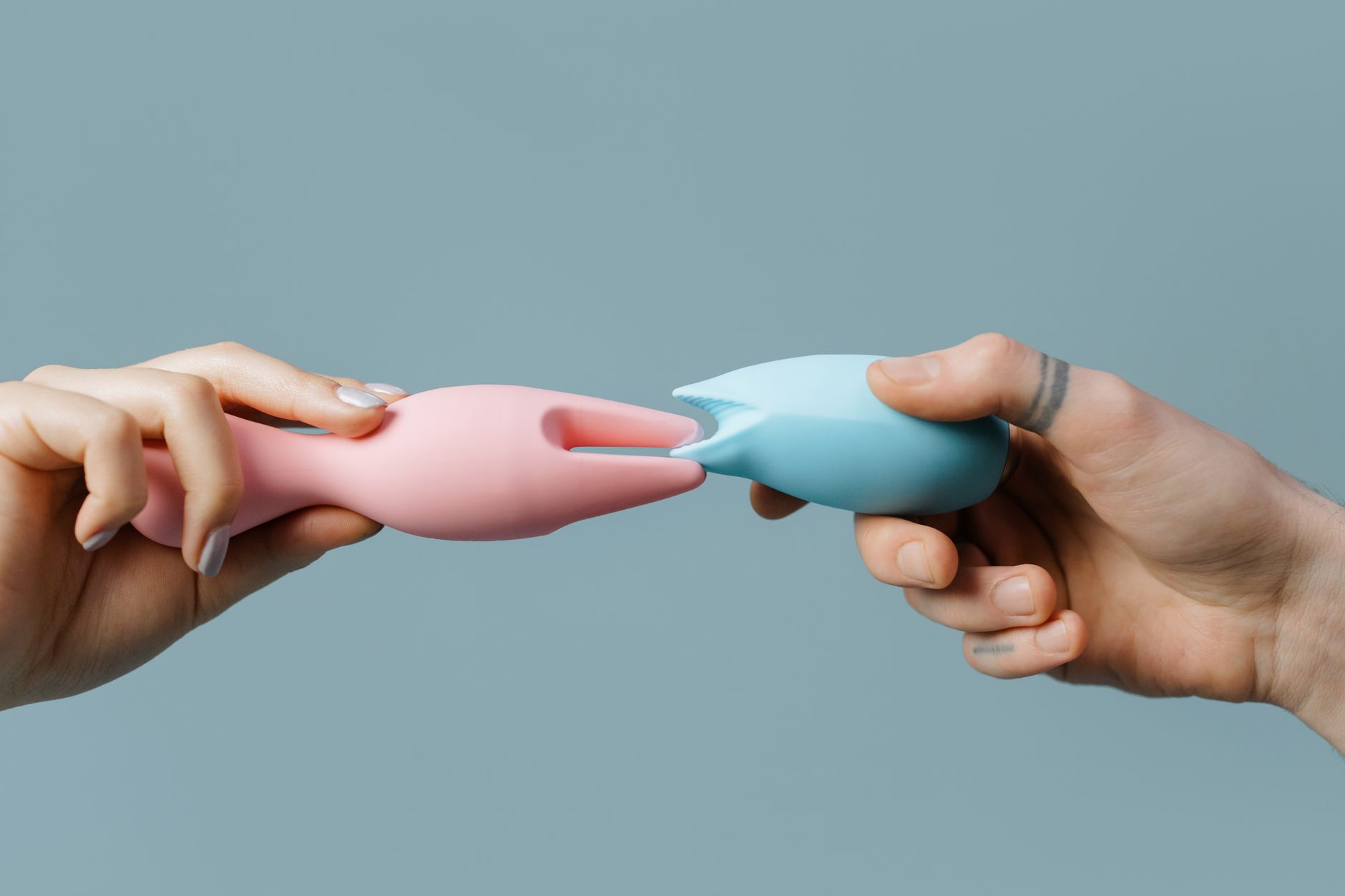
How to Use Lemon Vibrators When Depression Affects Your Libido
Depression kills desire at the root. Here's how lemon clitoral vibrators can help you reconnect with pleasure when motivation is the barrier, not the body.
Here's what nobody tells you about depression and sex. It's not that your body stops working. Your brain stops sending the signal that pleasure is even worth pursuing. You could have zero physical barriers to arousal, perfect lubrication, a responsive clitoris, an attentive partner, the whole picture. And still, the thought of touching yourself feels like climbing a mountain when you're running on fumes.
When you're depressed, pleasure doesn't feel absent. It feels irrelevant. This is different from how lemon vibrators help when orgasms feel weaker or less intense. In that scenario, the sensation is muted but you still want it. Depression removes the want itself.
The brain chemistry involved is straightforward. Depression flattens dopamine, which is the neurotransmitter responsible for motivation and reward-seeking. Serotonin also tanks, which affects mood and emotional connection. You're not lazy. You're chemically motivated to prioritize nothing.
This matters because it changes how to approach pleasure during treatment. You're not trying to fix sensation. You're trying to lower the activation energy required to start.
Imagine your brain requires "100 units of motivation" to initiate sex when you're well. During depression, that bar jumps to 500 units. Therapy, medication, exercise, sleep, structure. Those address the underlying chemistry. But they don't immediately make pleasure feel urgent.
This is where tools like lemon vibrators shift the equation. They're not fixing depression. They're making it possible to experience a small moment of pleasure without needing to manufacture motivation you don't have.
A lemon clitoral vibrator requires almost zero activation energy. No setup, no warm-up period that demands you drum up enthusiasm. You hold it. Sensation happens. Your body responds even when your brain is offline.
During depression, diffuse sensation (like partner touch or manual stimulation) often feels like noise. The clitoris, by contrast, has dense nerve endings that produce sharp, localized input. That directness cuts through the fog.
Lemon suction vibrators are particularly effective here because the sensation is so distinct it doesn't require emotional investment to register. You feel it immediately, physically, without needing to "be in the mood."
This is not about chasing a massive orgasm. This is about your nervous system registering a signal that pleasure is still possible. That matters more than you think. It reestablishes the possibility, even if it takes three months of five-minute sessions before you feel anything close to desire.
Here's what helps when depression has your motivation underwater.
First, don't set expectations around orgasm. This needs to be smaller. Your goal is fifteen minutes once a day where you use the vibrator without judgment. That's it. Not for pleasure yet. Just for sensory input.
Second, anchor it to something you already do. After your morning coffee. Before bed. Anytime the activation energy is already somewhat met by an existing routine. Your brain is more likely to follow through.
Third, keep it beside your bed or in a place where friction is zero. If you have to search for it, you won't. Accessibility is not a small thing when you're depressed.
Fourth, try different patterns and speeds. Depression mutes sensation, so you might need stronger, more varied input than you'd use otherwise. The Lem vibrator's pattern options matter here because monotony gets boring fast when your brain is already disengaged.
Sometimes you start this practice and you still feel nothing. No arousal, no sensitivity, nothing. That's not failure. That's your nervous system telling you the depression is deeper than pleasure can reach right now.
Increase the other things. Sleep, movement, medication adjustment if you're on SSRIs (they're notorious for flattening libido, and your doctor can help). Therapy, especially if it targets behavioral activation or cognitive patterns. Pleasure will come back when the depression loosens its grip.
But keep the vibrator nearby. The moment you feel even a 2% shift, you have something ready to amplify that signal.
If you're in a relationship, this gets more complicated because your partner is probably experiencing the loss of your sexuality too. Resentment builds. Disconnection sets in. And then when you finally want to try, the relationship is already injured.
Be honest early. Not "I might feel sexy soon." More like "Depression is killing my desire right now. This isn't about you or us. I'm going to work on it with these specific tools. I need you to understand this will take time."
Then use the vibrator solo. Rebuild your own relationship with pleasure first. Once you feel something, then you can invite your partner in. This protects both of you from the pressure that kills whatever fragile desire is returning.
Many antidepressants tank libido, especially SSRIs. If you're on them and noticing zero interest in sex, talk to your doctor before assuming it's the depression itself. You might benefit from a different medication, a lower dose, or an augmentation strategy.
This conversation matters because it prevents you from spending six months thinking your sexuality is broken when really your medication adjustment could shift things in weeks.
Once your medication starts lifting the depression, your brain chemistry normalizes. Dopamine climbs again. Motivation returns. That's when lemon clitoral vibrators become genuinely pleasurable instead of a practice you're doing because you know you should.
The vibrator becomes a bridge tool. It meets you where you are, keeps sensory pathways active during the worst of it, then becomes pure pleasure once the chemistry shifts.
Rebounding from depression into pleasure is not linear. You'll have days where the vibrator feels amazing and days where you can barely feel it. Both are normal. The nervous system is recalibrating.
Your job is consistency over intensity. Five minutes with the Lem beats an hour of pressure on yourself to feel something you're not ready for yet.
Desire will come back. It always does. You're not broken. Your brain is just temporarily offline. The tools exist to keep sensation alive while you wait.
Completely. Depression doesn't care about your relationship quality. It's a brain chemistry issue, not a relationship issue. You can be deeply in love and still have zero interest in sex. The two run on different neural tracks. This is why it's critical to separate "my relationship is the problem" from "depression is the problem." One requires relationship work. The other requires mental health treatment. Confusing them delays both.
It varies wildly. Some people notice shifts within weeks of starting medication. Others take months. The timeline depends on depression severity, medication type, whether you're in therapy, sleep quality, and movement. There's no standard. What matters is that you're tracking it and adjusting treatment if there's zero movement after 8-12 weeks.
Completely normal. Depression numbs sensation, so you might use the vibrator and feel almost nothing. That doesn't mean it's not working. Numbness is depression's signature. The vibrator is still sending signals to your nervous system, which matters even if you're not consciously feeling pleasure yet. Keep going. Sensation often returns as the depression lifts, not before.
That depends on your relationship agreements around solo pleasure. If you're in a monogamous relationship where toy use wasn't discussed, transparency matters. A simple conversation goes a long way. "Depression is affecting my libido. I'm using a tool to stay connected to my body while I work on this. I want you to know." Most partners appreciate honesty over discovering it accidentally.
Talk to your prescriber. SSRIs especially are notorious for sexual side effects. Your doctor can switch you to a medication with lower sexual impact, adjust your dose, or add something to counteract the effect. Don't just live with it. This is a solvable problem, and your psychiatrist has multiple options. Sometimes a small change ripples into significant improvement.
Orgasms during depression are possible but often feel muted or impossible. Some people experience delayed orgasm even when sensation is present. Others feel nothing until the depression lifts. There's no universal timeline. Using a lemon clitoral vibrator keeps that possibility alive. Even if full orgasms feel impossible right now, small moments of sensation matter. They remind your nervous system that pleasure is still in there.
Depression steals many things. Pleasure often feels like it's on that list. But it's not gone. It's just temporarily inaccessible. Tools like lemon vibrators, combined with proper treatment, help you keep that door cracked open while your brain chemistry recovers. Your sexuality isn't broken. Depression is just in the way. Give yourself time, be consistent with your tools, and trust that desire will return.