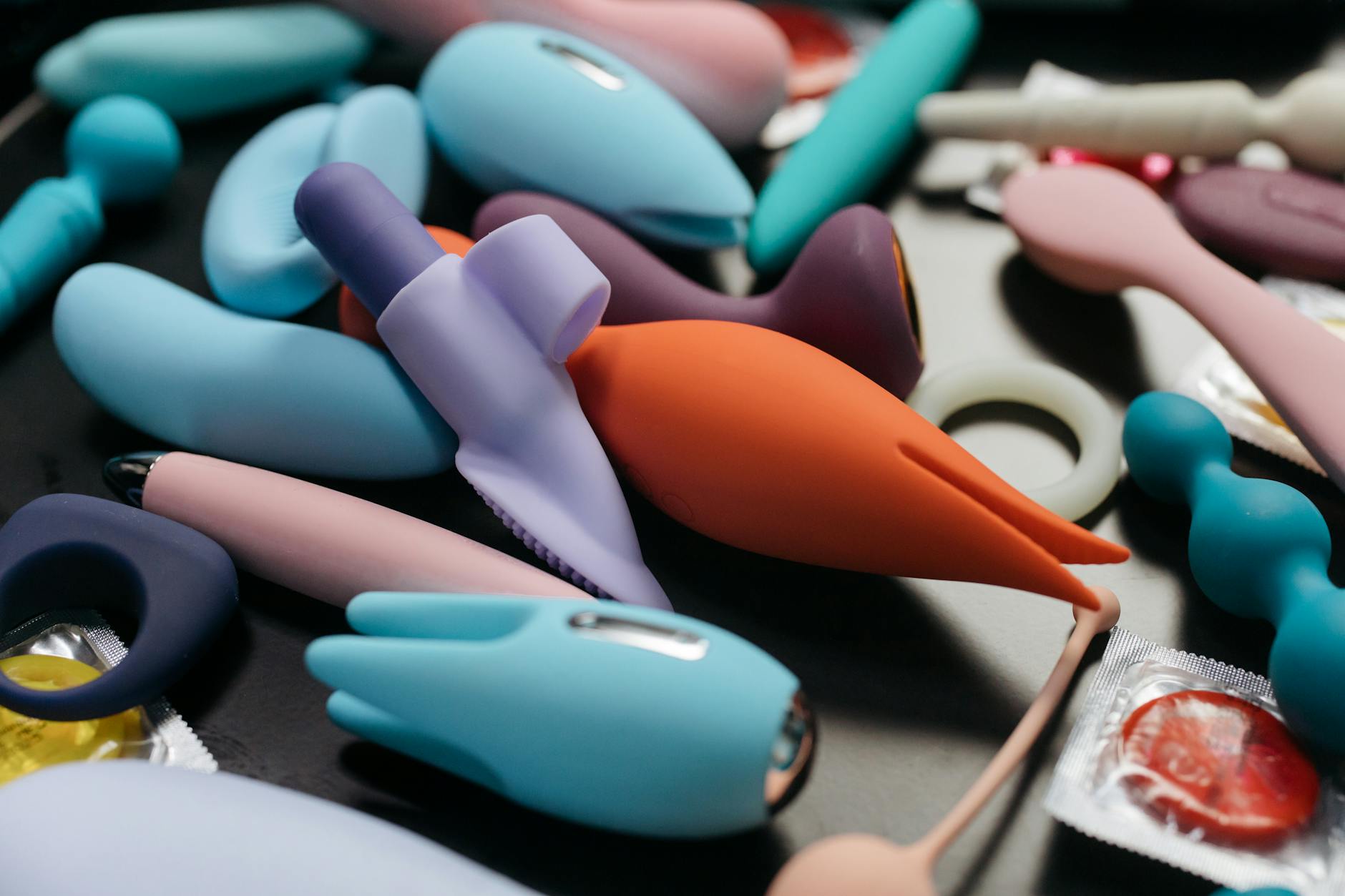
When erectile dysfunction enters a relationship, both partners often freeze. He feels shame and pressure to perform. You might feel rejected, or worry that using a vibrator will make things worse. Here's what I tell couples in my practice: a lemon clitoral vibrator doesn't replace him. It removes the performance pressure that's actually making ED worse.
Erectile dysfunction is rarely purely physical. Anxiety, stress, relationship tension, and the weight of expectation create a feedback loop. He worries he won't get hard. That worry makes it harder. You sense the tension and adjust your own responses to manage it. Nobody's actually present. Everyone's in their head.
A good lemon vibrator interrupts that cycle entirely.
Traditional vibrators demand something from penetration. They're often framed as "add-ons" to partnered sex, which reinforces the idea that penetration is the main event and everything else is foreplay. That framing is what gets couples stuck.
Lemon clitoral vibrators, particularly air-suction styles, flip the script. They're not a supplement to him. They're a center point. A lemon sucker focuses stimulation on the clitoris with precision that a hand or penis simply can't replicate consistently. The suction mimics the sensation of oral sex without the fatigue or technique variability. For a lot of people, that's actually more reliable for orgasm than penetration.
When your pleasure becomes the priority, the pressure on him lifts immediately. He's not measuring his worth by his erection. He's watching you experience real satisfaction. That shifts everything.
Don't surprise him with a vibrator during sex. That's how vibrators become "evidence" that he's failing instead of a tool for mutual pleasure.
Pick a calm moment. Outside the bedroom. Maybe morning coffee or a walk.
Here's a script that works:
"I've been thinking about our sex life. I know you've been stressed about things not working the way they used to. I've been stressed too. I want to try something that might take the pressure off both of us. I found this clitoral vibrator. I'm really curious about trying it together. It's not about you being inadequate. It's about both of us getting more of what feels good. I want to experience more pleasure, and I want to see you not carrying that weight."
Notice what that does. It names the real problem (pressure), it centers your pleasure (not his failure), and it positions the vibrator as collaborative, not compensatory.
If he's resistant, don't push. Ask what he's worried about. Usually it's one of three things: shame, the idea that you're not satisfied with him, or concern that it means penetration is ending. All three are addressable through conversation. Give him space to sit with the idea.
Start with him just present. You using a lemon vibrator solo in front of a partner he trusts is powerful. It removes the performance component entirely. You're not performing for him. You're exploring your own body. He gets to witness real pleasure without being responsible for it.
There are a few ways this can unfold:
Option one: He provides other touch. While you use the vibrator on your clitoris, he can use his hands on your breasts, your neck, your legs. Different parts of your body, different kinds of touch, all at once. This is intimate and collaborative without requiring him to have an erection.
Option two: Penetration happens if and when it happens naturally. If you're both aroused and he gets hard, you can incorporate it. If he doesn't, you keep going without it. The vibrator means the sex doesn't stop when his erection fluctuates, which takes the whole pressure cycle off.
Option three: Oral and vibration. Some couples find that combining oral sex with a lemon vibrator (on low intensity so it doesn't overwhelm sensation) creates a new kind of rhythm neither person has experienced before. It's collaborative, it shares the workload, and it's genuinely hot.
The key: whatever you do, it should feel like both of you are experimenting, not like you're managing his dysfunction.
First, the anxiety dial drops. When his penis isn't the sole focus of the sex, ED becomes less central to the experience. It's still there, but it's not the boss of the evening anymore. That alone often improves function because the parasympathetic nervous system activates (you actually relax) instead of staying locked in fight or flight.
Second, you get genuine pleasure again. A lot of partners with ED partners have learned to suppress their own arousal to manage their partner's stress. Using a lemon clitoral vibrator forces you to prioritize your own sensations. That's not selfish. That's necessary. It also tends to be wildly attractive to a partner. Watching someone experience real pleasure has a way of shifting the entire dynamic.
"I wasn't thinking about whether I could get hard. I was just... present. That was good."
That's the goal. Presence. Pleasure. Release from the performance framework that ED creates.
Some couples find that once they've removed the pressure a few times, erectile function actually improves on its own because the anxiety is gone. Others find that they don't need it to. They've rebuilt something more resilient than what was there before: sex that isn't contingent on one person's body doing one specific thing.
Vibratos are not a replacement for a doctor's visit. If ED is new or sudden, or if it's been persistent for months, your partner should see a doctor. ED can be a sign of cardiovascular issues, hormone imbalance, or medication side effects. Those things matter.
Meanwhile, a lemon sucker helps rebuild confidence and pleasure. Medical treatment (whether that's medication, therapy, or lifestyle changes) addresses the root cause. They're not competing. They work together.
What I've noticed after two decades of coaching couples is that ED often signals something deeper: a relationship has been organized around one person's pleasure or one person's body doing the work. A lemon vibrator forces a reorganization. Both people have to think about pleasure differently. Both people have to communicate. Both people have to show up differently.
That's uncomfortable at first. But couples who move through it tend to end up with better sex and deeper connection than couples who never had to reckon with this problem. They've been forced to talk, to experiment, to see each other's actual pleasure instead of performing for an imagined ideal.
Your partner having ED is painful. But it doesn't have to kill your sex life. It can actually rebuild it, if you're willing to try something different.
No. In fact, removing pressure usually improves erectile function. ED is often anxiety driven, and vibrators remove the performance framework that creates anxiety. If anything, introducing a vibrator creates space for his body to relax, which is what's needed for better function.
Absolutely. Vibrators aren't a replacement for penetration. They're typically used alongside it. Many couples use them during foreplay, then incorporate penetration when both people are aroused. Some use them during penetration (internal vibrators) or external stimulation while penetrating. You get to decide what works for your bodies.
That shame is worth naming directly. Ask him what he's afraid of. Usually it's that the vibrator means he's failing you. That's a conversation about what you actually want and what you actually feel, not about the vibrator itself. Sometimes a therapist or sex educator can help reframe this if shame is really thick.
Frame it as an experiment for both of you, not as a solution to his problem. Center your own pleasure and curiosity. "I want to experience more of what feels good for me, and I want to explore this together" is very different from "We need to fix your ED." The first invites collaboration. The second invites shame.
Sometimes. Often the anxiety that drives ED is situational. If removing pressure and rebuilding confidence addresses the root cause, function can improve significantly. For some people, ED has a medical component that requires medication or lifestyle changes alongside relational work. Both things can be true.
Respect that. Some partners need more time to acclimate to the idea. You can use it solo, which is also valuable. Over time, watching you experience pleasure might shift his comfort level. If it doesn't, that might signal a deeper relationship issue worth exploring with a therapist.